
Committed to Service Excellence, Ensuring Hassle-Free Support.
Creating Value for Customers, Leading the Future with Technology.

With the rapid development of modern scientific research and testing technologies, the accuracy and repeatability of experimental results have become crucial across various fields, including biomedicine, chemical analysis, materials science, and food testing. Environmental conditions within a laboratory can easily affect the activity of experimental samples, the stability of reagents, and the measurement precision of sophisticated instruments. Even extremely minor temperature fluctuations can lead to data deviations, reagent failure, or even irreversible losses in research efforts.
1. The Impact of Temperature on Laboratory Samples and Equipment:Reagents, biological samples (such as cells, DNA, and blood products), and reference materials must remain under strict temperature control throughout all stages—from storage and preparation to final experimental procedures. Any oversight in temperature control during storage or testing can trigger sample degradation, chemical reagent deterioration, or instrument calibration drift. In severe cases, it can cause entire research projects to fail or produce erroneous test reports, leading to significant research setbacks or quality incidents.
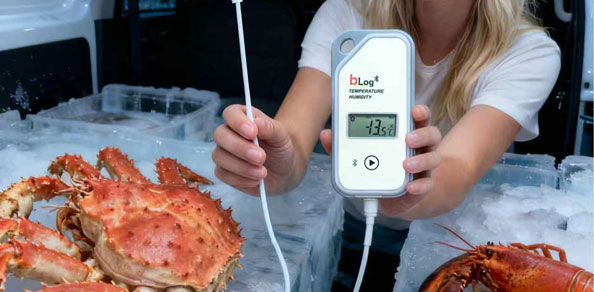
2. Applications of Temperature Recorders in the Laboratory:In daily research and testing workflows, continuous temperature recorders can be installed in general laboratory areas, constant temperature and humidity rooms, ultra-low temperature freezers, incubators, and medical refrigerators. These devices enable laboratory managers and researchers to monitor temperature variations across different zones and equipment in real time. Should temperatures breach predefined threshold limits, the recorders trigger immediate alarms, allowing staff to quickly troubleshoot and mitigate risks. Additionally, historical data exported from the devices serves as traceable evidence for laboratory quality management systems (such as CNAS, GLP, or GMP compliance), ensuring that the entire experimental process remains authentic, secure, and compliant.
3. Conclusion:Temperature recorders play a vital role in standardized laboratory management and quality control. From sample receipt, pretreatment, and incubation analysis to long-term storage, these devices are indispensable across every stage of scientific research and testing. Whether in basic chemical laboratories, biosafety labs, cold rooms, or precision instrument facilities—wherever strict temperature monitoring is required—temperature recorders are essential. Beyond scientific research and testing, they also hold significant importance in healthcare, vaccination sites, and environmental monitoring.